New York Daily Mirror
The Plot Against AmericaThe New York Daily Mirror is presented as both a mass-market newspaper and a contested platform for Walter Winchell: the paper carried his widely syndicated column, even as its owner, William Randolph Hearst, despised his politics. Its role in Winchell’s firing and its dismissive coverage of his 1942 campaigning make the paper part of the story’s struggle over who could speak, and be heard, in public life.
Ownership and Reach
Owned by William Randolph Hearst, the New York Daily Mirror competed for readers’ nickels in New York City. Hearst was described as the country’s wealthiest publisher, with a chain of roughly thirty right-wing newspapers, half a dozen popular magazines, and King Features, through which Winchell’s column reached many millions more readers. The Mirror therefore belonged to a substantial publishing network, while serving as a prominent local home for Winchell’s writing.
The paper’s commercial interest in Winchell stood in tension with Hearst’s political dislike of him. Hearst particularly resented Winchell’s praise of Franklin D. Roosevelt and, according to the account, would have fired him years earlier if readers had not found the columnist’s mixture of muckraking contentiousness and cloying patriotism irresistible. The readership that sustained Winchell’s appeal thus helped keep him in the paper despite the owner’s hostility.
Winchell’s Dismissal
Winchell’s column in the New York Daily Mirror became his vehicle for responding to his loss of a radio contract and attacking the administration’s pressure on dissenting voices. He claimed that Hearst finally fired him less because of their long-standing animosity than because of pressure from the White House—pressure so consequential, in Winchell’s account, that even Hearst feared resisting it. The distinction matters: the paper’s owner had opposed Winchell for years, but Winchell framed the final break as part of a larger effort to silence political criticism.
Coverage of the 1942 Campaign
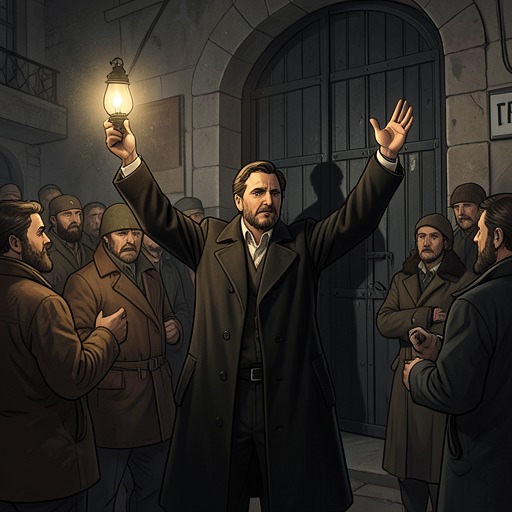
The New York Daily Mirror also assessed Winchell’s attempt to build support for routing Republicans from Congress. As he campaigned around Manhattan on September 8, 1942, the paper treated the effort less as grassroots organizing than as a publicity stunt by an unemployed columnist unwilling to leave the spotlight. No Democratic congressional candidate appeared within hearing distance of his bullhorn, a conspicuous absence that reinforced the paper’s skeptical portrayal of his campaign.
The paper’s account placed Winchell’s fiery rhetoric against the political standing of the president he attacked: candidates stayed away from his association of Adolf Hitler with Franklin D. Roosevelt, whom most Americans still admired. In this portrayal, the Mirror was not merely recording Winchell’s campaigning; it was judging the gap between his urgent appeals and the limited institutional support he could attract. Its coverage completes the paper’s double role in his story: it had once distributed his voice to millions, but also represented a press environment in which his political reach and credibility could be contested.